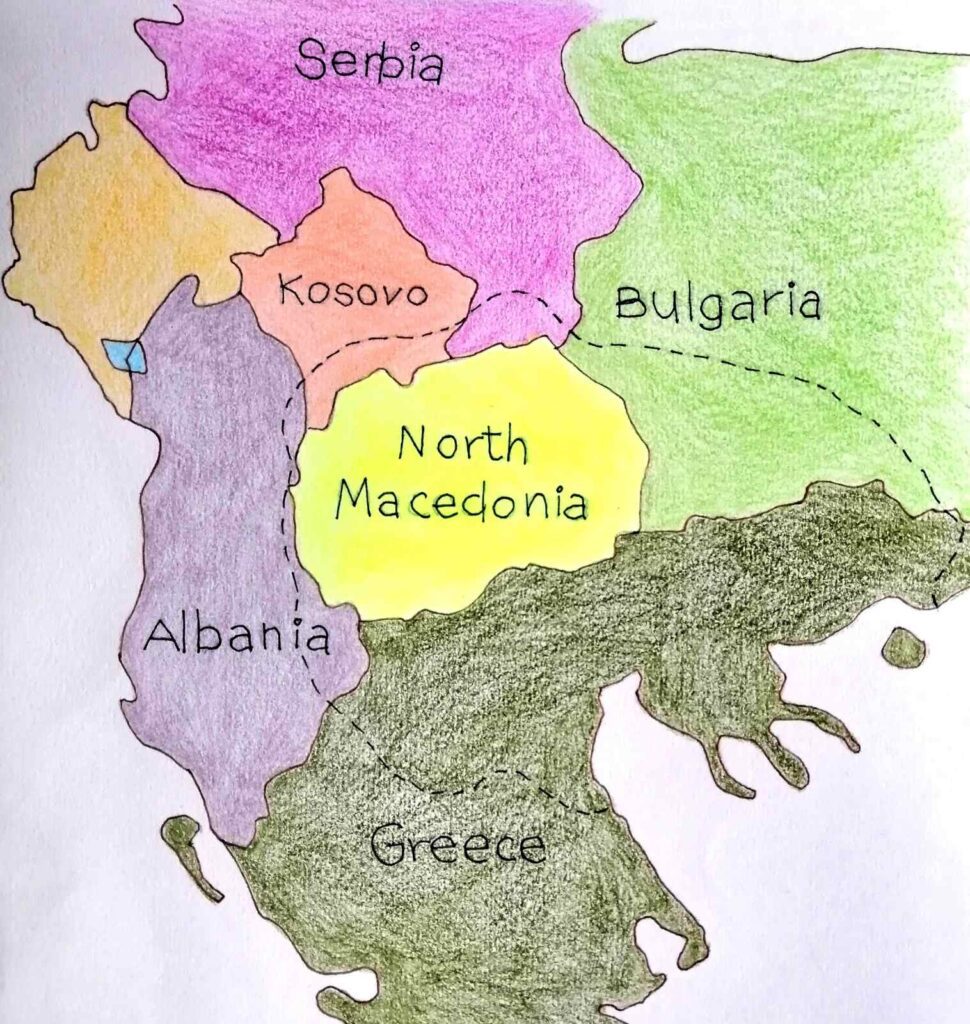
This touches on the subjects of language Make contact with and etymology, semantics and also the expressiveness of quite a few precisely colloquial phenomena. An examination is undertaken to determine the extent to which we are able to trace parallels to universally used methods of linguistic creativeness.
These languages generally have e cost-free term purchase and therefore are SVO languages.The subject in Balkan language could be pre verbal or post verbal. An additional linguistic phenomenon within the Balkan languages is the professional- Fall or Null Topic. Balkan languages end result as Professional- drop languages: they allow a Null issue inside of their clauses. Beside this, the professional subject matter is achievable inside the subordinate clauses much too. We've analyzed inside a Generative watch this phenomenon, dependant on the latest linguistic research. We found out that it is the verb Agreement, with its characteristics [+T,+AGR] which licenses the professional subject. In this particular framework Now we have analyzed not simply the clauses of some Balkan languages, but will also their sentences. We learned that not the many Null subjects from the subordinate clauses are pro-dropt. Some languages like Albanian and Italian have a Null Subject within their clauses, for the reason that the two of them Use a rich inflectional verbal procedure. We're going to discover What's going on Together with the Balkan languages, if they may have or not Null Topics within their sentences. Crucial text: Sprachbund, Balkan languages, subject matter, structure, Pro- Fall, Null Subject.
This really is demonstrated by examples from colloquial speech that are the means of linguistic creativeness. The examples originate from present surveys with speakers of many Balkan languages. The contribution analyses several of the methods of lexi- cal creativity.
Qualitative methods in kind of elicitation ended up utilized. The outcomes indicated indications of semantic bleaching and obtaining qualities of a particle in the usage of the Kurdish word and gave justification for the potential investigate concerning the etymology of the particles on Balkans.
A vital theoretical question is raised about the potential of discriminating, via strictly linguistic approaches, the outcomes of language contact from developments influenced by interior aspects. This involves innovative improvements during the stock and distribution procedures of phonemes, grammatical models (markers), classes, lexical, and phraseological composition on the language. The prospective job of Get hold of in preserving archaisms in language structure is usually considered.
This paper investigates the linguistic landscape of Dubrovnik and Kotor within the Southeastern Adriatic Coastline, and Mytilene in the north Aegean making an attempt a theorization of its findings within the intersection of (socio)linguistics, ethnography, and semiotics, that has gained ground as being the System of option in linguistic landscape (LL) investigation. I argue which the inflow of both equally travellers and refugees, Regardless of the noticeable discrepancies concerning the two teams, has had radical repercussions for that LL which have thus far captivated virtually no attention from the appropriate literature. And yet, tourism plus the arrival of new populations have appreciable and Long lasting effects over the LL which may only be sufficiently investigated by systematic ethnographic reports of your semiotic suggests used in inscribing it.
Macedonian has produced a grammatical category which specifies the opposition of witnessed and noted steps (often called renarration). For each this grammatical classification, you can distinguish in between минато определено i.e. definite previous, denoting gatherings the speaker witnessed in a supplied definite time point, and минато неопределено i.e. indefinite earlier denoting gatherings that did not happen in a definite time place or functions noted for the speaker, excluding enough time component inside the latter case.
There isn't a vocative situation in neuter nouns. The job of the vocative is simply facultative and there is a typical inclination of vocative decline from the language because its use is taken into account impolite and dialectal.[83] The vocative can be expressed by modifying the tone.[80][eighty four]
The paper analyzes and compares kinship phrases in various Balkan languages: Albanian, Aromanian, Bulgarian, Greek and Macedonian. Even though the Balkan techniques of kinship terms are related, they differ in the volume of lexical goods along with the meanings they code. The structural Examination on the kinship terms filters out widespread semantic functions and aids to make the semantic products that underlie the five Balkan methods. The mixture of a few to 5 semantic options establishes the dimensions and the make up of each system.
Länder, in denen Muttersprachler einen Anteil von nur wenigen tausend oder gar hundert Menschen haben oder Länder mit einem Anteil deutlich unter 1% werden hier nicht mehr gelistet.
A common function in Balkan Sprachbund is using expressive particles, for instance bre, be, vre, re, extra, mori and ma in colloquial speech. In certain resources the origin from the particles has long been claimed being the Greek moros," moron". The aim of this analyze was to map and look into using the particles in Serbian, Bulgarian, Greek, and Alternatively to help make a grammatical and semantic comparison While using the term bre/bra, "brother", in Kurdish, that has an Practically similar phonetic look as among the list of particles on Balkans.
[86] The immediate object is often a remnant in the accusative case plus the oblique of the dative. Reflexive pronouns also have kinds for each immediate and indirect objects: себе се, себе си. Examples of own pronouns are proven underneath:
The paper promotions with English language influences on modern spoken and penned Serbian in the domains of Kulturwörter, Global text, and hybrid development, in addition to in just what the creator considers to get the zone of toughest impact: lexical semantics, phraseology, and syntax.
Macedonian and Bulgarian are divergent with the remaining South Slavic languages in that they do not use noun conditions (aside from the vocative, Welche Sprache spricht man in Mazedonien and besides some traces of as soon as effective inflections however found scattered through these two) and have shed the infinitive.[20] Also they are the only Slavic languages with any definite content articles (contrary to typical Bulgarian, which takes advantage of only one short article, regular Macedonian along with some south-eastern Bulgarian dialects[21] Have got a list of three deictic content articles: unspecified, proximal and distal definite write-up).
There isn't a big difference in meaning, although the latter kind is a lot more normally Employed in spoken language. A further long run tense is potential up to now and that is fashioned using the clitic ќе along with the past tense with the verb inflected for individual, таа ќе заминеше ("she might have remaining").[80]
The present tense in Macedonian is shaped by adding a suffix to your verb stem and that is inflected for each person, form and variety of the topic. Macedonian verbs are conventionally divided into 3 principal conjugations in accordance with the thematic vowel used in the citation sort (i.
Welche Sprache spricht man in Mazedonien?
Viele Menschen stellen sich die Frage: Welche Sprache spricht man in Mazedonien? Die offizielle und am weitesten verbreitete Sprache ist Mazedonisch. Sie wird von der Mehrheit der Bevölkerung als Muttersprache gesprochen und dient als Amtssprache in Verwaltung, Politik, Bildung und Medien. Im alltäglichen Leben ist Mazedonisch allgegenwärtig und verbindet Menschen unterschiedlicher Generationen.
Neben der mazedonischen Sprache existieren jedoch weitere Sprachen, die von ethnischen Minderheiten gesprochen werden. Besonders Albanisch nimmt eine bedeutende Stellung ein und wird in bestimmten Regionen auch offiziell verwendet. Diese sprachliche Vielfalt ist ein charakteristisches Merkmal Mazedoniens und zeigt die multikulturelle Struktur des Landes.
Mazedonische Sprache: Herkunft und Besonderheiten
Die Mazedonische Sprache gehört zur südslawischen Sprachfamilie und ist eng mit dem Bulgarischen und Serbischen verwandt. Trotz dieser Nähe besitzt sie eine eigenständige grammatikalische Struktur und einen eigenen Wortschatz. Geschrieben wird Mazedonisch mit dem kyrillischen Alphabet, das speziell an die Lautstruktur der Sprache angepasst wurde.
Ein besonderes Merkmal der mazedonischen Sprache ist ihre vergleichsweise einfache Grammatik im Vergleich zu anderen slawischen Sprachen. Bestimmte Artikel werden direkt an das Substantiv angehängt, was sie von vielen europäischen Sprachen unterscheidet. Diese sprachlichen Eigenschaften machen Mazedonisch sowohl einzigartig als auch interessant für Sprachwissenschaftler.
Sprache in Mazedonien: Alltag und Mehrsprachigkeit
Die Sprache in Mazedonien ist stark von Mehrsprachigkeit Welche Sprache spricht man in Mazedonien geprägt. Aufgrund der ethnischen Vielfalt des Landes werden im Alltag häufig mehrere Sprachen parallel verwendet. In vielen Städten ist es üblich, dass Menschen Mazedonisch und Albanisch oder andere Sprachen fließend sprechen.
Die mazedonische Verfassung erkennt die sprachlichen Rechte von Minderheiten an, was zu einem offenen und inklusiven Sprachsystem geführt hat. In Schulen, öffentlichen Institutionen und sogar im politischen Diskurs ist Mehrsprachigkeit fest verankert. Diese Praxis trägt dazu bei, den sozialen Zusammenhalt zu stärken und kulturelle Unterschiede zu respektieren.
Sprachentwicklung im Balkanraum: Historische Einflüsse
Die Sprachentwicklung im Balkanraum ist das Ergebnis jahrhundertelanger historischer Prozesse. Der Balkan war stets ein Schnittpunkt verschiedener Kulturen, Völker und Reiche. Diese kontinuierlichen Begegnungen führten dazu, dass sich Sprachen gegenseitig beeinflussten und gemeinsame Strukturen entwickelten.
Auch die mazedonische Sprache wurde durch diese Entwicklungen geprägt. Sie enthält zahlreiche Lehnwörter aus dem Türkischen, Griechischen und Albanischen. Gleichzeitig teilt sie grammatikalische Merkmale mit anderen Balkan-Sprachen, obwohl diese unterschiedlichen Sprachfamilien angehören. Dieses Phänomen macht den Balkan sprachwissenschaftlich besonders interessant.
Historische Entwicklung der mazedonischen Sprache
Die mazedonische Sprache wurde erst Mitte des 20. Jahrhunderts offiziell als eigenständige Sprache anerkannt. Im Jahr 1945 begann die Standardisierung, bei der eine einheitliche Grammatik und Rechtschreibung festgelegt wurden. Dieser Prozess war entscheidend für die Entwicklung einer modernen Literatursprache.
Seitdem hat sich Mazedonisch stetig weiterentwickelt und ist heute in Literatur, Journalismus, Film und digitalen Medien präsent. Die Sprache wurde zu einem wichtigen Symbol nationaler Identität und kultureller Selbstbestimmung.